Drafty doors and windows
Drafts come in through the gaps around doors and windows: worn weatherstripping, missing door sweeps, failed caulk and frames that no longer close tightly. Most of them can be sealed in a single visit.
What you may notice
- Daylight visible under or around an exterior door
- Cold air felt near windows and doors in winter
- Rooms that are hard to heat or cool evenly
- Rattling doors or windows on windy days
- Dust and insects coming in at the sill
Tell us what needs fixing
Licensed trades where the law says so
Fans, fixtures and new plumbing go to licensed electricians and plumbers, as North Carolina requires. Everything else goes to an experienced handyman.
The price before the work
An hourly rate and minimum, or a flat price per job, plus what materials will cost, agreed before anyone picks up a tool.
Left cleaner than it was found
Drop cloths down, drywall dust contained, packaging and old parts hauled off, and the list walked through together at the end.
Finding the leaks
Drafts are easiest to find on a cold or windy day:
- Feel around the edges of doors and windows with the back of your hand.
- Watch a stick of incense or a candle flame near the frame; smoke that blows sideways shows moving air.
- Look for daylight under and around exterior doors, especially at the bottom corners.
- Try the paper test, closing a door or window on a sheet of paper; if it pulls out easily, the seal is weak.
Doors usually leak at the bottom and around the latch side. Windows usually leak where the sashes meet, around the trim, and at the sill.
Fixing drafty doors
- New weatherstripping. Most modern exterior doors use foam or rubber weatherstripping that presses into a slot in the jamb. It is easy to replace once the right profile is found.
- A new door sweep or bottom seal. The rubber seal on the bottom of the door wears out and tears. Replacing it closes the gap at the threshold.
- Threshold adjustment. Many exterior doors have an adjustable threshold with screws that raise it to meet the door bottom.
- Latch and hinge adjustments. A door that does not close tightly against its weatherstripping leaks no matter how good the seal is. Moving the strike plate and tightening the hinges pulls the door snug.
- Caulking the exterior trim. Gaps between the door’s brick molding and the siding or brick let air and water in.
Fixing drafty windows
- Lock the sashes. On double-hung windows, the lock pulls the two sashes together. A window left unlocked can leak noticeably more.
- Caulk interior trim. The gap between window casing and the wall is filled with paintable caulk.
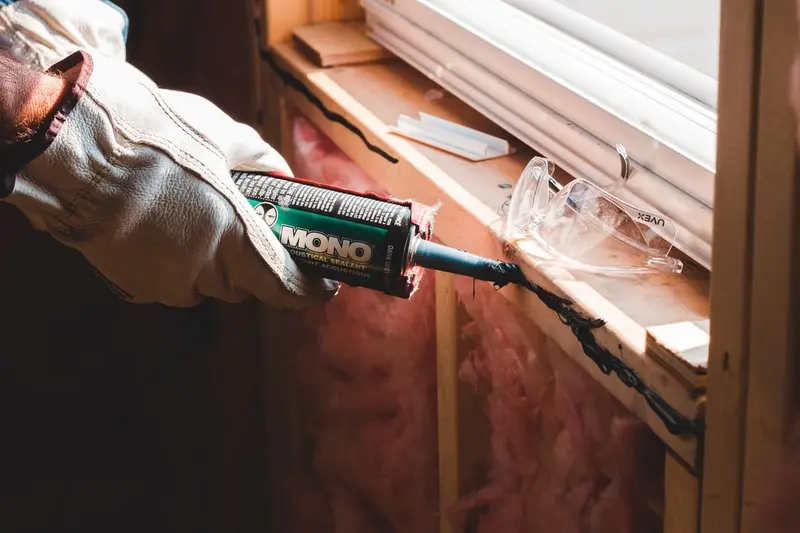
- Seal the exterior. Failed caulk around the exterior trim and where the window meets the siding is removed and replaced with an exterior-grade sealant.
- Replace sash seals. Vinyl windows use pile or bulb weatherstripping in channels that can be replaced.
- Adjust or repair balances. Sashes that drop or will not stay closed may need new balances.
Other places air sneaks in
- Attic hatches and pull-down stairs, often uninsulated and unsealed, can leak a great deal of air. Weatherstripping and an insulated cover help.
- Garage entry doors need weatherstripping and a sweep like any exterior door, both for comfort and to keep garage fumes out.
- Storm doors add a second layer in front of an exterior door, but their sweeps and closers wear out too, and a storm door that never closes fully adds little.
- Dryer vents and exterior penetrations where pipes and cables enter can be sealed with the right products.
Rot behind the draft
A door or window that has started leaking air may also be letting in water. Soft wood at the bottom of a door frame, crumbling sills and peeling paint around windows are signs that the problem has gone past weatherstripping. Rotted wood is replaced before new seals and caulk go on. See wood rot repair.
Fogged glass and old windows
Fogging between two panes of glass means the insulated glass unit has failed. It does not usually cause a draft, but it does reduce insulation. The glass unit can often be replaced without replacing the whole window. Old single-pane windows, rotted wood sashes and frames that are out of square are better candidates for full replacement.
Getting it fixed
Sealing a house is a good fall project before the heating season, and many of these fixes fit into a single visit. See door repair for weatherstripping, sweeps and thresholds, and caulking and grout repair for sealing around trim and windows.
Drafty doors and windows — common questions
How do I know if my weatherstripping needs replacing?
Close the door on a strip of paper. If it slides out easily, the seal is not tight there. Flattened, torn, cracked or missing weatherstripping, and daylight showing around the door, also mean it is time.
Do I need new windows to stop drafts?
Usually not. Drafts most often come from failed caulk, worn weatherstripping or locks that do not pull the sashes tight. New windows make more sense when frames are rotted, glass is fogged, or the windows are old single-pane units.
Is drafty air a problem in summer, too?
Yes. In the Triangle, the same gaps let warm, humid air in, which makes air conditioning work harder and can leave rooms feeling clammy.
Other common repairs
Not sure what it needs?
Call and describe what is happening, or send the details through the form and a local pro will get back to you.