Door repair and installation in Cary, NC
Doors that rub, drag or will not latch, sliding doors that fight you, and worn-out doors that need replacing: adjusted, repaired or swapped for new ones, inside and out.
- Sagging doors tightened and realigned
- Latches and strike plates adjusted
- New interior and exterior doors hung
- Sliding patio door rollers and tracks
- Locksets, hinges, stops and closers
Covering Cary · Apex · Holly Springs · Morrisville · Raleigh
Get a quote for door repair and installation
Licensed trades where the law says so
Fans, fixtures and new plumbing go to licensed electricians and plumbers, as North Carolina requires. Everything else goes to an experienced handyman.
The price before the work
An hourly rate and minimum, or a flat price per job, plus what materials will cost, agreed before anyone picks up a tool.
Left cleaner than it was found
Drop cloths down, drywall dust contained, packaging and old parts hauled off, and the list walked through together at the end.
Why choose us
Small jobs, done right the first time
Most calls are a list of small things that have waited for months: a door that rubs, a mirror that never got hung, a hole behind a door, a toilet that runs at night. Doing each one properly, and as many as possible in one visit, is the whole job.
- Mounts anchored into studs
- Patches blended and painted
- Licensed trades when required
- Upfront hourly or flat pricing
- Whole lists in one visit
- Local to Cary
Why doors stop working
Doors are hung with only a fraction of an inch of clearance, so small changes show up quickly. The usual causes:
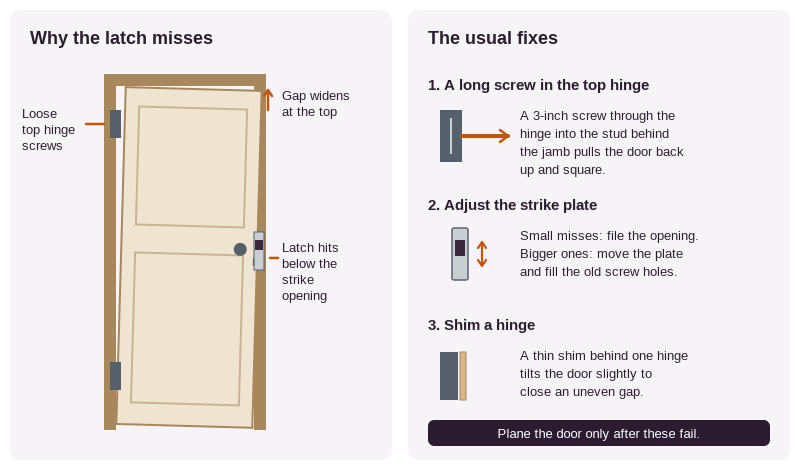
- Loose hinge screws, especially in the top hinge, which let the door sag toward the latch side.
- Humidity, which swells wood doors and frames through Triangle summers.
- Settling, which can rack a frame out of square over time.
- Worn hardware, such as latches that no longer spring back and strike plates that have shifted.
- Paint buildup on the edges and stops after several repaints.
Fixing a sagging door
The most effective fix is often the simplest. Replacing one of the short screws in the top hinge with a 3-inch screw that reaches the wall stud behind the jamb pulls the door back up and square. If that is not enough, the hinges are shimmed or the hinge mortises are adjusted. Planing comes last, because a door that is planed to fit a racked frame gaps once the frame is corrected.
Latches and strike plates
When the latch hits above or below the opening in the strike plate, the door will not stay closed. Small misses are fixed by filing the strike opening. Bigger ones mean moving the strike plate, chiseling its recess deeper and filling the old screw holes. Latches that stick or no longer retract are usually cheaper to replace than repair.
Sliding patio doors
Sliding glass doors run on small rollers at the bottom of each panel, and those rollers wear out, seize or sink. Many have adjustment screws at the bottom ends of the panel that raise the door off a worn track. Cleaning the track and adjusting the rollers often makes a door glide again; worn-out rollers can be replaced by lifting the panel out. The sliding door hard to open page has more.
Closet and bifold doors
Bifold and sliding closet doors jump their tracks constantly. Pivot pins, guides and track hardware are inexpensive and quick to replace, and adjusting the top pivot usually stops a bifold from binding.
Hanging a new door
- Interior doors come as hollow-core, which is light and inexpensive, or solid-core, which is heavier, quieter and blocks more sound. Prehung units replace the frame too; slabs reuse the existing frame and need hinge mortises and a lockset bore cut to match.
- Exterior doors need careful flashing at the sill, weatherstripping, an adjustable threshold and a well-sealed frame, because water and air get in wherever those are skipped. Replacing an exterior door that has rotted at the bottom often means replacing part or all of the frame. See wood rot repair.
- Storm doors add a layer of protection and ventilation. They need a square opening and a properly adjusted closer.
Hardware
New locksets, deadbolts, levers for easier opening, hinges, door stops and closers are all part of the same job. Lever handles are worth considering for anyone with arthritis or limited grip, and spring hinges or closers on garage entry doors help those close on their own where needed.
What door repair costs
Adjusting and tightening a door is often covered by a handyman’s minimum charge, especially alongside other jobs. Hanging a new interior door costs more, and exterior doors more again, since they take longer to fit and seal. The door itself is extra. The handyman cost guide has typical prices, and the door won’t latch page walks through the common causes.
Door repair and installation — common questions
Should I replace a door or fix it?
Most sticking, sagging and latching problems can be fixed with hinge screws, strike plate adjustments or a little planing. Replace a door when it is cracked, delaminating, rotted at the bottom, or warped badly enough that it no longer closes or seals.
What is the difference between a prehung door and a slab?
A slab is the door alone. A prehung door comes already hung on hinges in its own frame, which makes it easier to get square, and it is the usual choice when the old frame is damaged. A slab makes sense when the frame is sound and you want to keep the existing trim.
Why does my door only stick in the summer?
Humidity. Wood doors take on moisture in humid weather and swell, especially along unpainted top and bottom edges. Sealing those edges and adjusting the hinges often solves it without planing.
Problems this fixes
Often booked with this