Picture and shelf hanging in Cary, NC
Art, mirrors, floating shelves, curtain rods, blinds and hooks, hung level, at the right height and on fasteners matched to the weight and the wall, whether it is drywall, plaster, brick or tile.
- Gallery walls laid out before any holes
- Heavy mirrors on cleats or into studs
- Floating shelves that stay level
- Curtain rods, blinds and shades
- Plaster, brick and tile walls handled
Covering Cary · Apex · Holly Springs · Morrisville · Raleigh
Get a quote for picture and shelf hanging
Licensed trades where the law says so
Fans, fixtures and new plumbing go to licensed electricians and plumbers, as North Carolina requires. Everything else goes to an experienced handyman.
The price before the work
An hourly rate and minimum, or a flat price per job, plus what materials will cost, agreed before anyone picks up a tool.
Left cleaner than it was found
Drop cloths down, drywall dust contained, packaging and old parts hauled off, and the list walked through together at the end.
Why choose us
Small jobs, done right the first time
Most calls are a list of small things that have waited for months: a door that rubs, a mirror that never got hung, a hole behind a door, a toilet that runs at night. Doing each one properly, and as many as possible in one visit, is the whole job.
- Mounts anchored into studs
- Patches blended and painted
- Licensed trades when required
- Upfront hourly or flat pricing
- Whole lists in one visit
- Local to Cary
Match the fastener to the wall and the weight
What holds a picture securely depends on two things: how heavy it is and what is behind the paint.
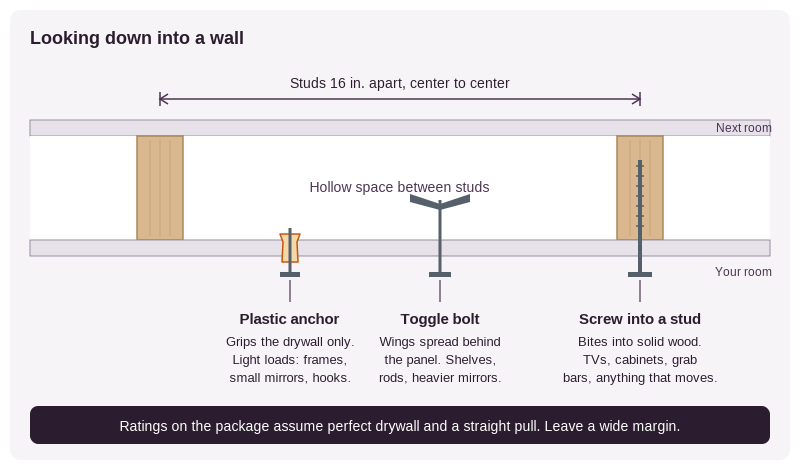
- Light pieces, like small frames and hooks, hang fine from picture hooks or small anchors in drywall.
- Medium loads, like shelves, curtain rods and mid-size mirrors, call for toggle bolts or screws into studs.
- Heavy and moving loads, like large mirrors, loaded bookshelves, coat racks that get yanked and anything a child might pull on, go into studs.
The guide to hanging heavy things on drywall goes deeper into anchors and their limits.
Gallery walls
A good gallery wall starts on the floor or on paper, not on the wall. Frames are arranged on the floor first, then traced onto kraft paper and taped to the wall, so the layout can be adjusted without a single hole. Spacing of two to three inches between frames keeps a group together. Once the layout is right, the nails go through the paper at the marked hanger points and the paper tears away.
Mirrors
Mirrors are heavier than they look and unforgiving if they fall. Large framed mirrors hang best from a French cleat, two interlocking beveled strips, one on the wall screwed into studs and one on the mirror, which spreads the weight and makes leveling easy. Frameless bathroom mirrors usually sit on clips anchored into the wall. Mirrors with a wire on the back should hang from two hooks, not one, to keep them level and share the load.
Shelves
Floating shelves look simple and are the most demanding to hang, because the whole load hangs on a hidden bracket. The bracket needs studs, a level line and a shelf that fits it snugly. Bracket shelves are more forgiving and can carry more. Closet shelving and garage storage systems hang on rails screwed into studs, so the weight of everything stored on them goes into the framing.
Curtain rods, blinds and shades
The wall just above a window usually has a solid wood header behind the drywall, which holds curtain rod brackets well. Mounting the rod a few inches above the window frame and extending it past the sides makes windows look bigger and lets the curtains clear the glass when open. Long rods need a center bracket so they do not sag. Blinds and shades mount either inside the window frame, which needs enough depth, or outside it on the wall or trim; measuring correctly before ordering saves a lot of trouble.
Plaster, brick and tile
Older houses around Raleigh and downtown Cary often have plaster on wood lath rather than drywall. Plaster is hard and brittle, so holes are drilled slowly with a sharp bit instead of hammering nails, which can crack the surrounding plaster or knock keys loose behind it. Brick and stone take masonry anchors set with a hammer drill. Tile takes a diamond or carbide bit and patience, and holes go through the tile, not the grout lines where it is weakest.
Renters
Leases often limit holes in the walls. Small nail holes are usually fine to leave or easy to fill, while heavy anchors and toggle bolts leave bigger patches. Check the lease, and plan to fill the holes before moving out.
What it costs
Hanging jobs are usually priced by the hour, with most handymen charging a minimum for a visit. Grouping several pieces, shelves and rods into one visit is the best value. The handyman cost guide explains typical rates.
Picture and shelf hanging — common questions
How high should art be hung?
A common guideline puts the center of a piece about 57 to 60 inches from the floor, close to eye level. Over a sofa or console, leave several inches between the furniture and the bottom of the frame so they read as a group.
What holds a heavy mirror on drywall?
Screws into studs are best. Where the studs do not line up, a French cleat spreads the load, and heavy-duty toggle bolts rated well above the mirror's weight work too. Plastic anchors and single nails are not enough for a heavy mirror.
Can floating shelves hold books?
Only if the hidden bracket is fastened into studs and rated for the load, and the shelf is stiff enough not to sag. Deep shelves full of books put a lot of leverage on the wall, so they need more support than a shelf for a few photos.
Often booked with this